For a first Northern Pakistan trip, start with a region and then select a mix of places. Hunza offers forts, Attabad and Passu; Baltistan combines lakes, deserts and palaces; Fairy Meadows, Rama and Deosai add different highland landscapes. These fifteen selections explain why to go and which visits need extra time.
Use a shortlist that respects the map
Northern Pakistan is a broad travel label, not one compact sightseeing area. A list becomes useful when it distinguishes central Hunza, Upper Hunza, Baltistan and separate high-country approaches. Combining all the famous names in one short holiday usually creates more travel than visiting time.
The selection below favours variety: royal heritage, a living settlement, mountain views, water, sand and meadows. It is an editorial starting point rather than a claim about measured visitor popularity. Choose the category that matters to you, then group the places into a coherent route. A first journey in one region can still offer a rich mix.
Fifteen different reasons to explore the north
Baltit Fort
Make Baltit the anchor of a Karimabad heritage morning. The climb through the town is part of the visit, so leave time for both the fort and the streets below. Its high position gives the architecture a clear defensive context. For travellers who enjoy historical interpretation, the interior visit is more useful than a quick photograph of the exterior. Combine it with bazaar time and a meal before continuing elsewhere. Visitors uncomfortable with uphill walking should discuss the approach in advance.
Good for: Heritage and architecture. Allow for: An uphill approach and steps.
Altit Fort and village
Altit works well as the second half of a central Hunza heritage day. The fort, village lanes and garden surroundings create a different setting from Baltit above Karimabad. Notice the timber and stone, then look at how the building sits over the river landscape. A local introduction helps connect the restored monument with the living village around it. This is a place for a slower visit, especially for travellers interested in settlement architecture as well as mountain scenery.
Good for: History and village streets. Allow for: Uneven surfaces and steps.
Ganish historical settlement
Choose Ganish when your interest extends beyond royal buildings. Its historical settlement spaces offer a closer look at communal life and architecture. Walk with an appropriate local introduction and respect the boundaries between visitor areas, religious spaces and homes. Ganish can fit a central Hunza day without adding a long road journey. The value lies in understanding a settlement, so one meaningful guided visit can be more rewarding than several extra viewpoint stops.
Good for: Settlement history. Allow for: A guided walk on village lanes.
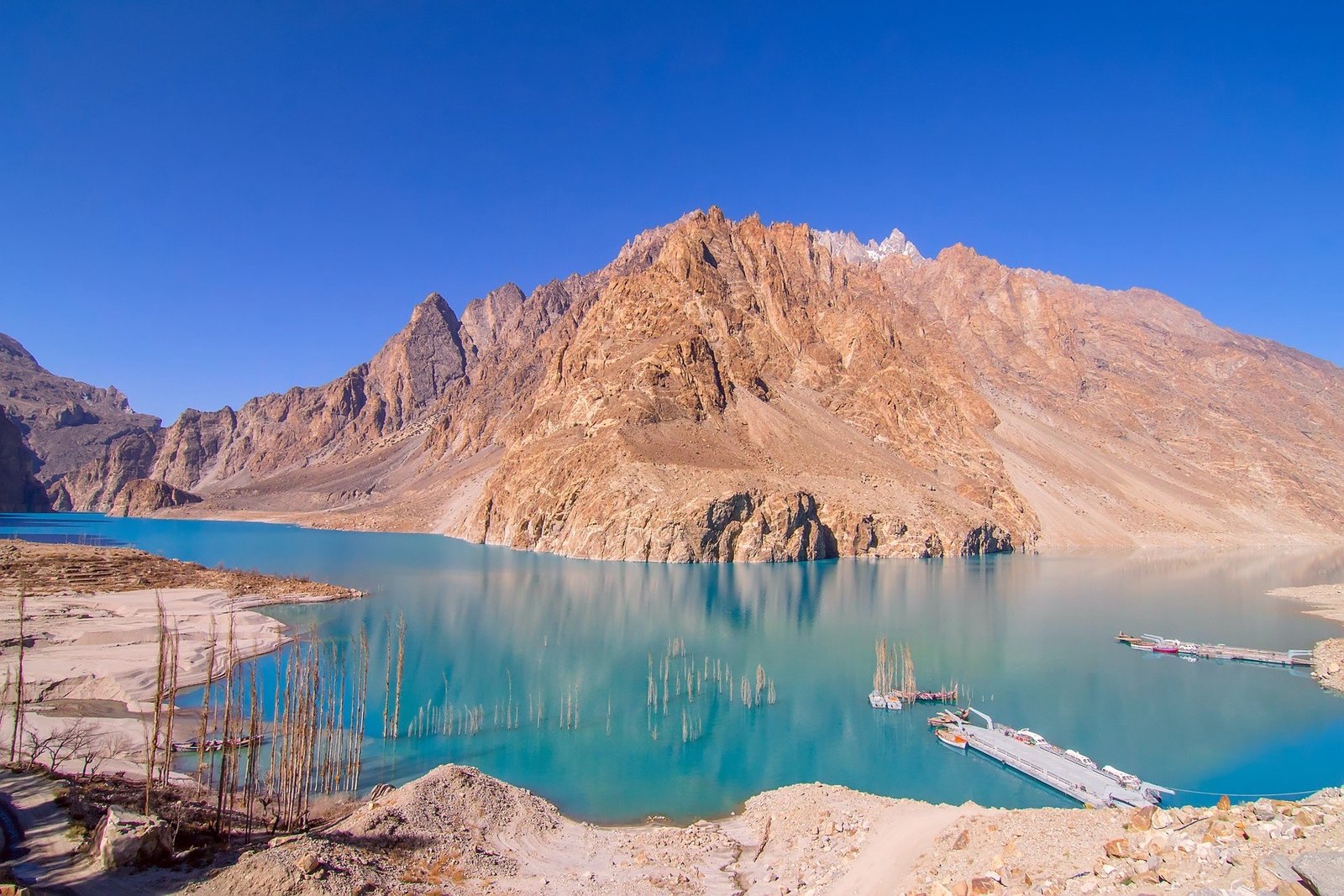
Attabad Lake
Attabad is the natural water stop on an Upper Hunza road day. Its 2010 landslide origin gives the lake a history that should accompany the familiar turquoise-water photograph. A viewpoint is enough for some visitors; an agreed boat excursion provides a different perspective. Families should check boarding and equipment with the operator. Continue towards Gulmit or Passu when the day’s programme permits, or stay beside the water for a more relaxed lake-focused experience.
Good for: Lake scenery and optional boating. Allow for: Road access; boat boarding varies.
Passu Cones
The cones around Passu give an Upper Hunza day its most recognisable mountain outline. You can enjoy the classic scene from suitable stops along the road, without committing to a trek. Change the foreground rather than chasing a closer peak view: the village, river and farmland create different compositions. An overnight gives another opportunity for favourable light. Keep photography away from the carriageway and ask before making people or private fields part of the image.
Good for: Mountain photography. Allow for: Roadside views and optional short walks.
Rakaposhi viewpoint
The Ghulmet viewpoint is a useful stop on the approach to Hunza through Nagar. When the summit is visible, it shows the remarkable scale between the valley and Rakaposhi. This roadside experience should not be advertised as a base-camp visit. Keep a walking objective separate, with dedicated time and support. Cloud can hide the upper mountain, so appreciate the lower slopes and village landscape as well. It is a route stop that works because of where it lies.
Good for: A mountain view on the route. Allow for: Roadside stop; base-camp trekking is separate.
Kargah Buddha
Kargah Buddha is one of the strongest reasons to give Gilgit a local sightseeing day. The large cliff carving introduces the Buddhist history of the region without requiring a remote expedition. Pair it with town and bazaar time for a mix of archaeology and everyday life. A guide can separate historical interpretation from the local legends around the figure. Keep the archaeological setting intact and use appropriate viewing points.
Good for: Archaeology and regional history. Allow for: A short outing with local walking.
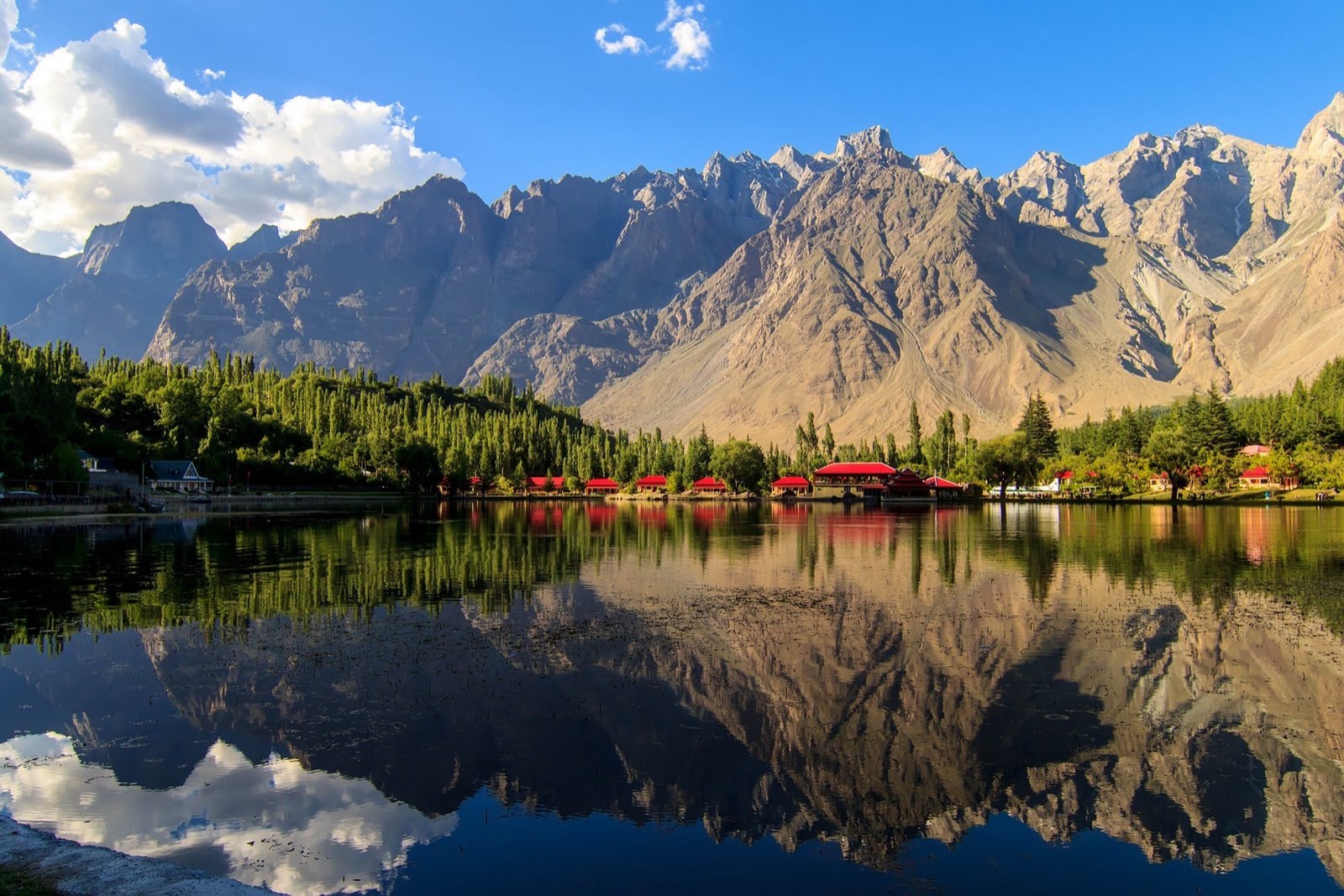
Lower Kachura / Shangrila Lake
Lower Kachura is the resort-and-lake setting often labelled Shangrila in Skardu photographs. Gardens and lakeside buildings make it a gentler scenic stop than an uphill fort walk. Access follows the property’s rules and a visit does not reserve a room. If the lake atmosphere is the main attraction, an resort stay creates more time there. Compare that base with Skardu town before choosing solely from a lake image.
Good for: Lakeside scenery. Allow for: Resort access and walking around the grounds.
Upper Kachura Lake
Upper Kachura is worth choosing for visitors who prefer a natural lakeside setting. It is separate from Lower Kachura and has an approach on foot after the road section. Time by the water should be part of the visit, not just the reward for reaching a photograph point. Review the ground and steps for anyone with limited mobility. A boat service, where suitable and available, remains a separate choice.
Good for: Natural lake scenery. Allow for: A walk to the lakeside.
Sarfaranga Cold Desert
Sarfaranga is the obvious Baltistan contrast for visitors who have already spent time beside a lake or at a fort. Its dunes sit in a mountain setting, giving the cold desert a distinctive scale. A short walk at a permitted location can be enough to appreciate it. Vehicle activities and events are separate experiences that affect price and access. Wind-blown sand matters for eyes and cameras, so a practical stop is better than a prolonged uncomfortable visit.
Good for: Dunes and mountain photography. Allow for: Sand walking; paid activities are separate.
Shigar Fort
Shigar Fort is a strong choice for a visitor interested in Balti architecture and restoration. The seventeenth-century building gives a valley visit a historical centre. Combine the heritage tour with the settlement and a selected landscape stop. Staying in the Serena-operated complex creates more time in the setting, but a hotel booking and day visitor access are different arrangements. The fort rewards interpretation rather than only an exterior photograph.
Good for: Restored Balti architecture. Allow for: Heritage-site walking and steps.
Khaplu Palace
Khaplu Palace gives an eastern Baltistan stay its architectural focus. The restored nineteenth-century residence combines timber, courtyards and garden space. A guided visit explains more than a view of the façade. An overnight in Khaplu allows the town and palace to be enjoyed without a same-day return to Skardu. Historic rooms and Garden House accommodation differ, so the particular reservation matters when the palace stay is part of the experience.
Good for: Palace heritage and gardens. Allow for: Steps and changes of level.
Fairy Meadows
Fairy Meadows is the choice for a traveller who wants an overnight meadow setting facing Nanga Parbat and is comfortable with its approach. The local track and uphill walking are substantial parts of the experience. Cabins and camps are simpler than town hotels. The view can be hidden by cloud, so value the forest and meadow time as well as the peak. This belongs in a focused mountain programme, rather than a casual extra stop on any road trip.
Good for: A meadow stay facing Nanga Parbat. Allow for: Mountain track plus uphill walking.
Rama Meadows and Rama Lake
Rama suits visitors looking for a forest-and-meadow landscape in the Astore area. The pasture visit and the lake walk are distinct choices, which is especially useful for a family with different walking preferences. An overnight in the wider valley can make the excursion less rushed. Upper access depends on conditions even when the lower area is pleasant. Choose Rama for the landscape and the desired walk, not as an assumed easy substitute for every other meadow.
Good for: Meadows, woodland and a mountain lake. Allow for: Road approach plus separate lake walk.
Deosai National Park
Deosai is the open-plateau choice. Its protected grasslands and long views provide a contrast to the enclosed valleys and woodland meadows. The outing needs a seasonal road check, a suitable vehicle and consideration of altitude. Wildlife belongs to the ecosystem and should be observed at a distance without a guaranteed sighting. A national-park visit is worthwhile for the landscape and conservation context even when no large mammal appears.
Good for: Highland landscapes and conservation. Allow for: High altitude and seasonal road access.
Which places suit a shorter first trip?
A focused Hunza trip can combine central heritage with an Upper Hunza lake-and-village day. A focused Baltistan trip can combine Skardu’s lakes with Shigar and selected town time. Both provide several landscape types without requiring every northern region.
A meadow or plateau objective changes the programme. Fairy Meadows needs its own approach and walking days. Rama fits an Astore stay. Deosai requires seasonal access and a suitable high-country outing. Include one because the experience matters, rather than adding it solely because it appears on a top-places list.
Match the place to the person
Heritage visitors may prefer longer fort interpretation and fewer roadside stops. Families may value gentler access, consecutive hotel nights and time for meals. Photographers often benefit from staying at a base where they can see the same landscape in different light. Walkers need the selected trail and support made explicit.
Some places combine these interests, but their physical demands differ. A road-accessible Passu view is different from a glacier trek, and a Rama meadow outing differs from the lake walk. Use the visit style to choose the stop. Our destination guides develop each region without requiring every activity in the shortlist.
Useful questions, answered
Can I see all fifteen places in a week?
A week is better used for a focused region. Interregional travel and high-country approaches need their own days.
Does this list include the whole of northern Pakistan?
No. It focuses on the Hunza, Gilgit, Baltistan and meadow regions covered by this site’s current catalogue.
What should I choose first?
Choose your main landscape or experience, then the region and travel month. The rest of the shortlist can support that choice.
Turn the places you like into your own route
Send us your travel month, days in Pakistan and the places that caught your interest. Our local team can discuss the guides, transport, stays and activities for your party.
Sources and latest checks
Destination facts were checked against the sources below on 13 October 2026. Suggested routes are editorial examples. Opening arrangements, seasonal access, travel advice and hotel services can change.
- Baltit Fort — regional information
- Attabad Lake — regional information
- Passu Cones — regional information
- Rakaposhi viewpoint — regional information
- Kargah Buddha — regional information
- Lower Kachura / Shangrila Lake — regional information
- Upper Kachura Lake — regional information
- Sarfaranga Cold Desert — regional information
- Shigar Fort — regional information
- Khaplu Palace — regional information
- Fairy Meadows — regional information
- Rama Meadows and Rama Lake — regional information
- Deosai National Park — regional information
FROM READING TO THE ROAD
Make it your journey.
Share your dates, the places you like and how you want to travel. Our local team will help shape the route.
Plan a private journey