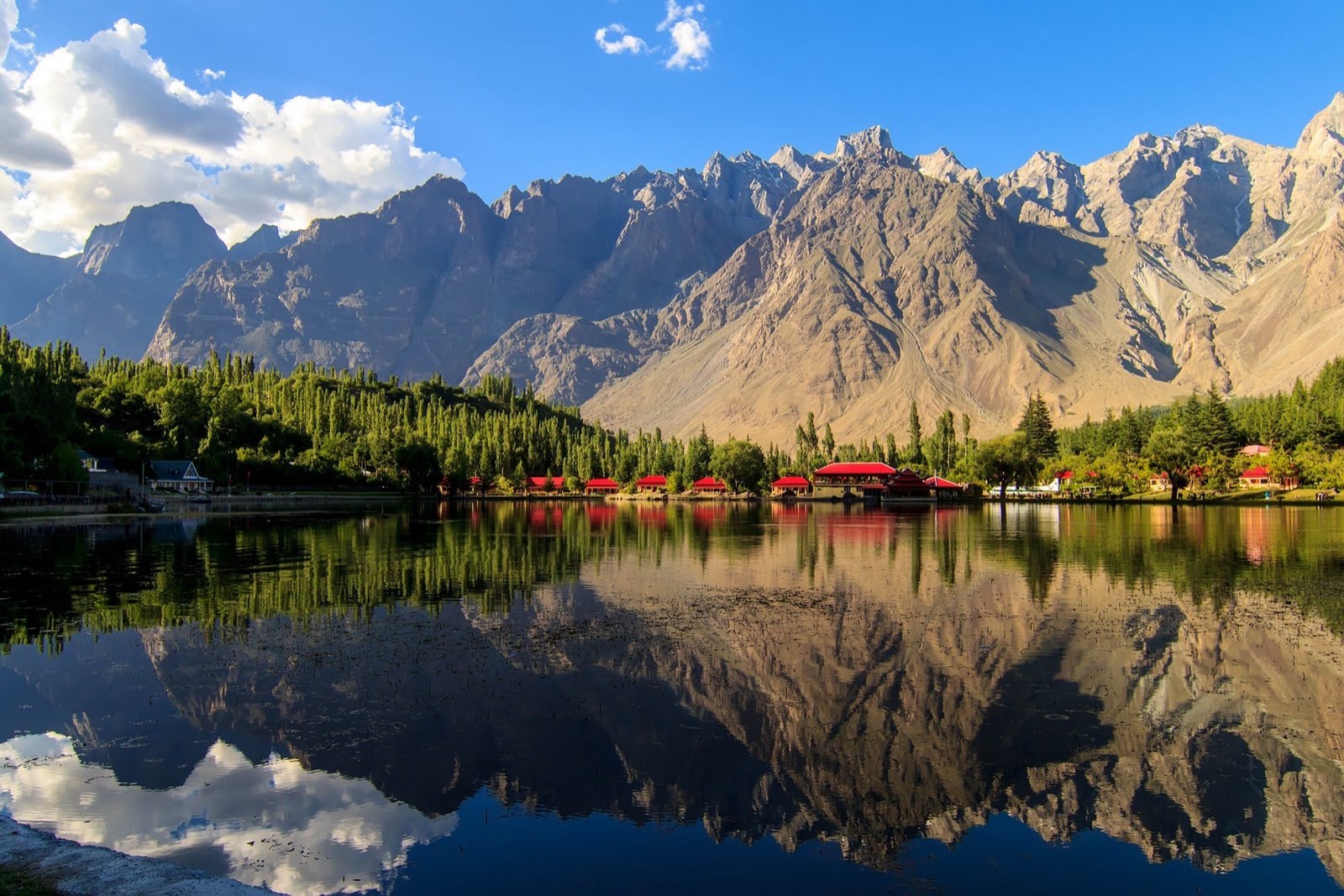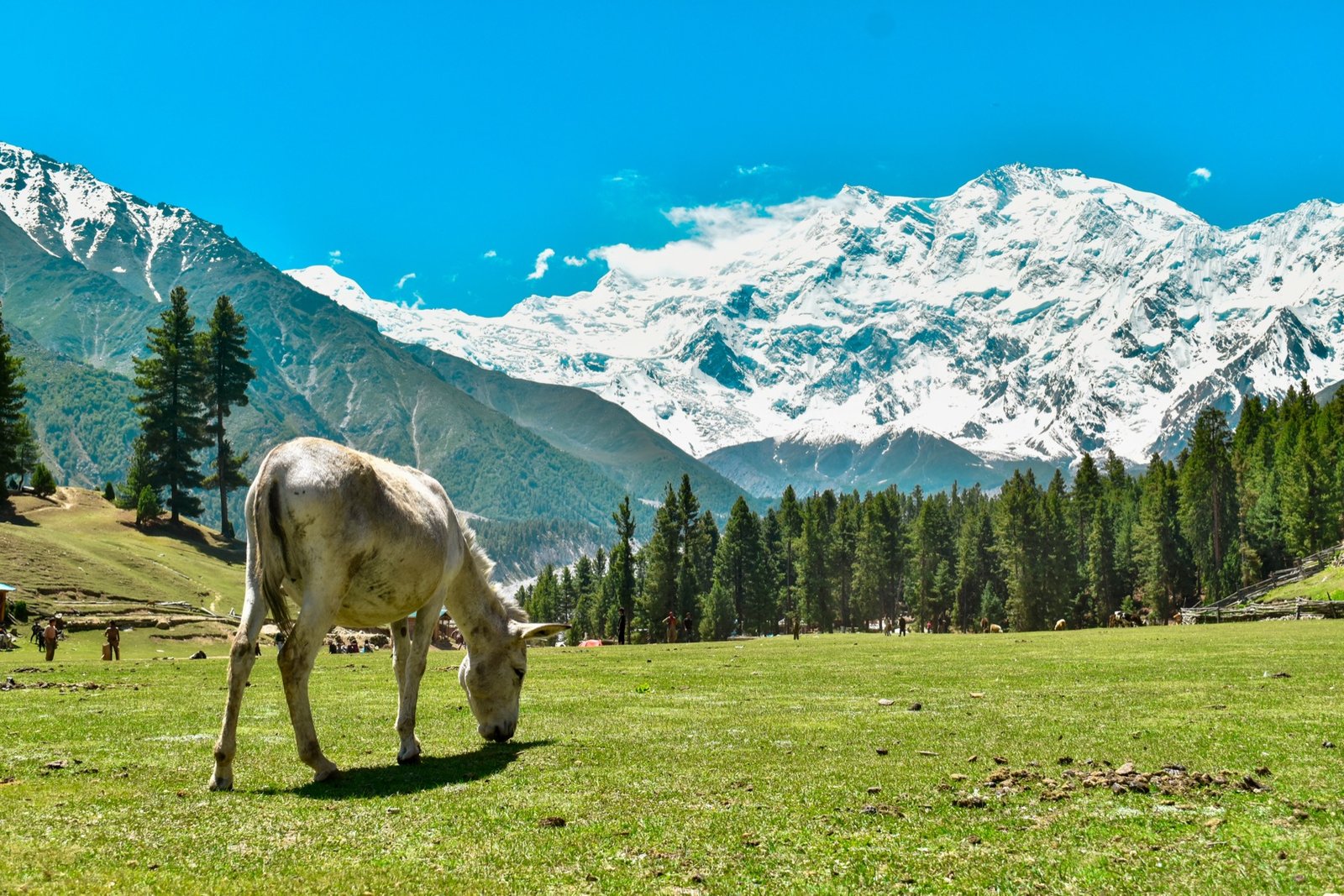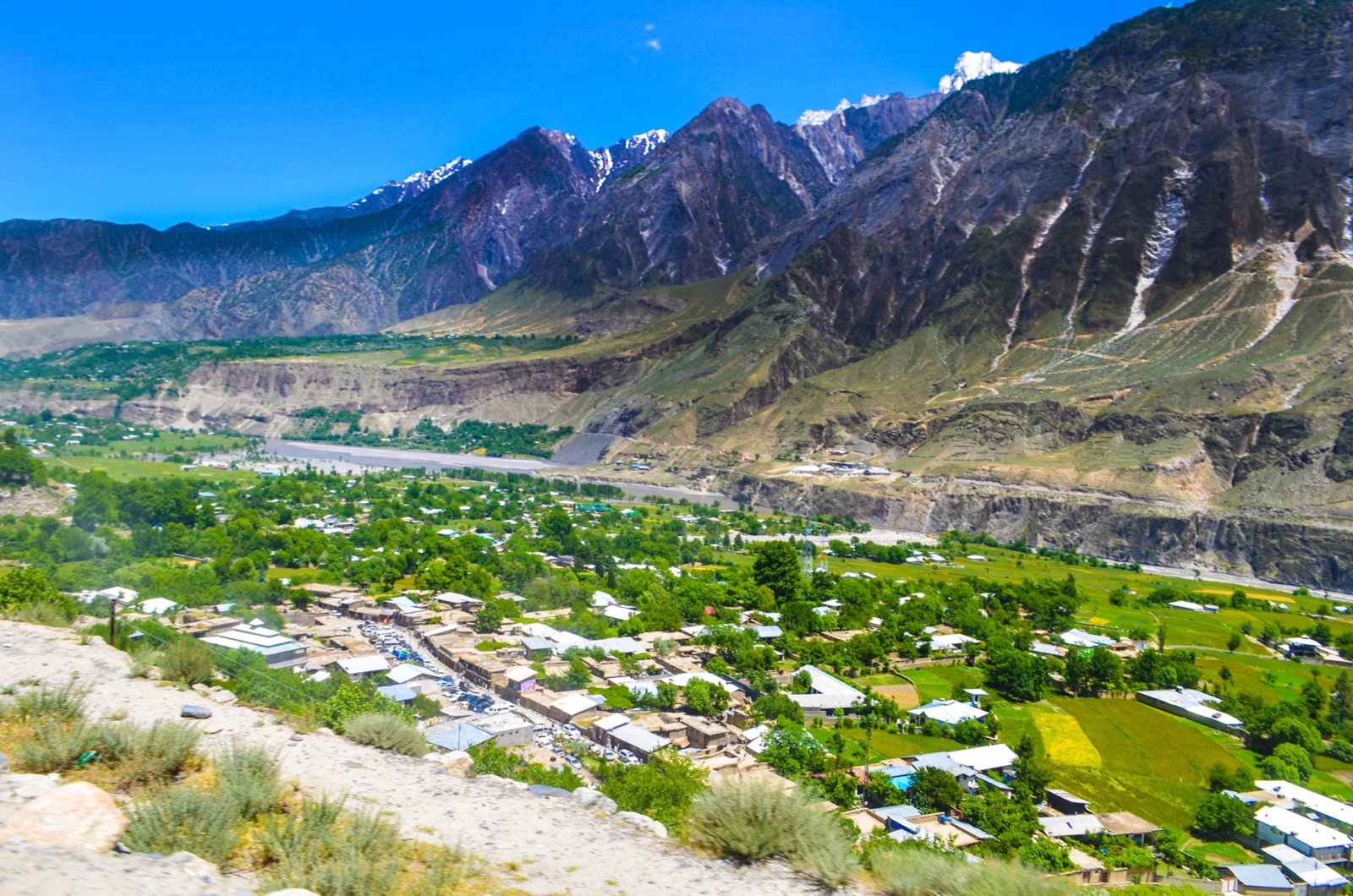
Hunza Valley combines restored forts, mountain villages and some of Northern Pakistan’s most recognisable scenery. Karimabad is the central heritage base; Attabad Lake and the Passu Cones belong to the onward journey into Upper Hunza. Give both parts time and the trip becomes more varied than a sequence of roadside photographs.
Gilgit → Nagar → Karimabad → Attabad Lake → Gulmit → Passu
A route framework; the programme is agreed for your dates.
Where Hunza is and how the valley fits together
Hunza lies in Gilgit-Baltistan along the Karakoram Highway north of Gilgit. The river corridor is the organising feature of a sightseeing trip: the road links settlements while side approaches lead to forts, viewpoints and neighbouring valleys. Central Hunza and Upper Hunza are useful planning areas rather than interchangeable hotel locations.
Karimabad is the obvious focus for Baltit Fort, the bazaar and visits towards Altit. Aliabad is part of the wider central valley. Continuing along the highway brings you to Attabad Lake, then the Gojal settlements around Gulmit, Hussaini and Passu. A lake hotel can shorten an Upper Hunza excursion, but adds a return journey when the day’s interest is Karimabad. Across the river, Nagar has its own villages, glacier scenery and walking approaches.
Main attractions and what to see
Heritage and architecture
Baltit Fort
Baltit Fort sits above Karimabad, with timber balconies and a commanding view across the Hunza valley. The building makes the relationship between rulers, villages and mountain routes easier to understand than a landscape photograph alone. Its hillside position is part of the experience: the approach climbs through Karimabad, and the visit involves steps and changes of level. A guided interior visit adds context to the rooms, construction and restoration. Afterwards, explore the streets below rather than immediately returning to the vehicle.
Visit style: An uphill approach and steps.
History and village streets
Altit Fort and village
Altit Fort occupies a rocky position above the Hunza River. Pair the restored building with the lanes of Altit village and the garden setting below it. Baltit and Altit belong to the same regional history but offer different surroundings: Baltit overlooks Karimabad, while Altit connects more closely with its village and cliff edge. Timber, stone and the defensive setting are worth noticing on a guided visit. Religious and residential spaces around the attraction remain part of a living community.
Visit style: Uneven surfaces and steps.
Settlement history
Ganish historical settlement
Ganish adds a different scale to Hunza’s heritage. Instead of focusing on a royal residence, the visit centres on a compact historical settlement, its communal spaces and surviving traditional buildings. Look for the relationship between houses, lanes and places of worship. The settlement is lived in; respectful behaviour matters more than arranging an unobstructed photograph. A local introduction helps explain what visitors may enter and which details have religious or community significance. Combine Ganish with a Karimabad heritage day.
Visit style: A guided walk on village lanes.
Wide valley panoramas
Duikar and Eagle’s Nest viewpoint
Duikar is the hillside area associated with the Eagle’s Nest viewpoint above central Hunza. The appeal is a broad mountain panorama rather than an individual monument. In favourable light, the valley floor, settlements and surrounding peaks create several layers in the view. Sunset is popular, but cloud can hide the mountains and the temperature falls after daylight. Stay for the changing light if conditions are good; choose a lower valley activity when they are not. Accommodation on the hillside changes the daily approach to Karimabad.
Visit style: A hillside drive followed by walking.
Lake scenery and optional boating
Attabad Lake
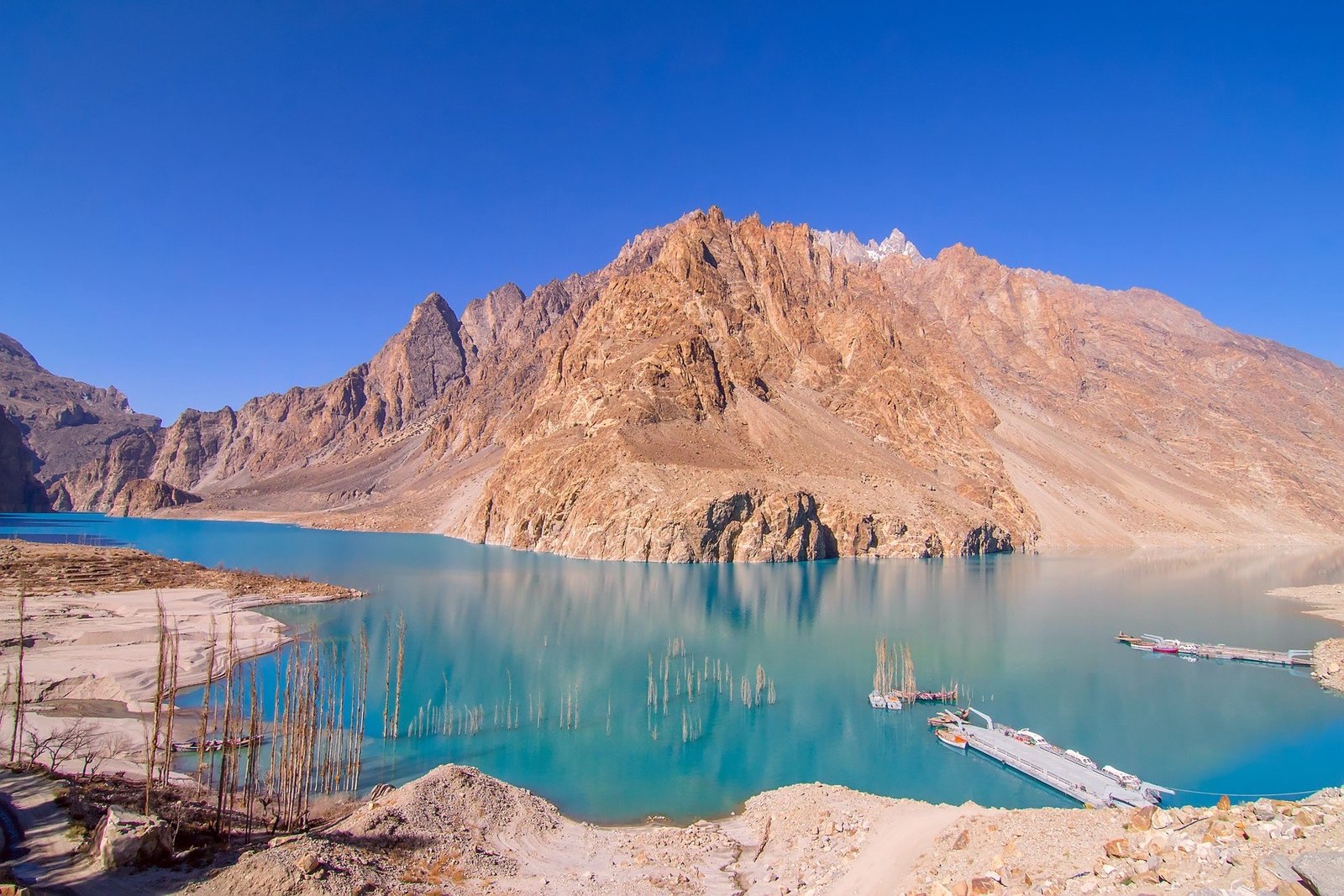
Attabad Lake is the turquoise lake beside the Karakoram Highway in Hunza, formed after the 2010 landslide blocked the Hunza River. It is both a striking attraction and a landscape with a recent human history of displacement and rebuilding. Roadside viewpoints show the lake’s shape; an optional boat excursion changes the perspective to water level. The route continues towards Gulmit and Passu, so a visit fits naturally into an Upper Hunza journey. A lakeside stay offers a different setting from a room in Karimabad.
Visit style: Road access; boat boarding varies.
Mountain photography
Passu Cones
The Passu Cones are the sharp, serrated peaks above Passu in Upper Hunza, also known as Cathedral Ridge. Their recognisable outline can be seen from the Karakoram Highway; a long trek is not needed for the classic view. The composition changes with the foreground: river stones, farmland and village paths give quite different photographs. An overnight stop allows another chance at clear light the next morning. The village around the landmark is a Wakhi community with homes and agricultural land, not an open photography set.
Visit style: Roadside views and optional short walks.
Three days in Hunza: an example with time at each place
Use the first full day for central Hunza. Start with Baltit Fort and the surrounding streets, then spend the afternoon around Altit and its village setting. Keep Duikar for a suitable late-afternoon view rather than making sunset the only chance to see the valley.
On the second day, follow the highway towards Attabad. Choose between a viewpoint visit and a separately arranged boat activity, then continue to Gulmit and Passu. A walk through a public village area gives the day more variety than several identical mountain stops. An Upper Hunza overnight can reduce backtracking.
Use the third day for the interest you want to develop: a Nagar excursion, more village time, a guided walk or a slower morning in Karimabad. This example covers days already in Hunza. It does not include the international arrival or the journey from Islamabad. Read our 7, 10 and 14-day itinerary ideas for the wider holiday.
Spring blossom, summer landscapes and autumn colour
Spring suits visitors interested in orchard blossom and village landscapes. Flowering moves with elevation and annual weather, so a single date cannot guarantee the same scene in every settlement. Lower and upper valley areas may look different during the same trip.
Summer gives more scope for outdoor days, although exposed viewpoints, rain and mountain-road disruption still need consideration. Autumn brings changes in orchard and poplar colour, particularly appealing to photographers who can spend consecutive nights in a valley base. Winter has a different atmosphere, shorter daylight and colder conditions; a hotel-and-heritage trip then should be designed specifically for the season.
For a first visit without a fixed outdoor objective, choose the landscape you want to see before choosing a travel month. A blossom trip, a walking trip and a winter mountain stay need different programmes. Our season guide separates valley sightseeing from higher-country access.
Hotels to consider by setting
This is an editorial shortlist by location and type of stay. It is not a star ranking or a claim that the hotels are our partners. Room availability, rates and facilities must be checked for your dates.
Karimabad, central Hunza
Hunza Serena Hotel
A central Hunza option for travellers who want a hotel base close to Karimabad’s heritage area. Its official site lists rooms, dining and wellness facilities. The practical reason to shortlist it is the connection with the town and fort visits. A room here serves a different daily route from accommodation beside Attabad Lake.
Consider for: Central Hunza sightseeing. Official property information ↗
Attabad Lake, Hunza
Luxus Hunza
A lakeside property to consider when Attabad is part of the stay rather than a brief excursion. Its official site lists several room categories, including family and lake-view options, along with dining and heating facilities. Select the category and view requested; a general hotel image does not describe every room.
Consider for: An Attabad lakeside stay. Official property information ↗
Bazaar time, food and living villages
Karimabad’s bazaar gives the visit a social centre between fort visits. Browse small shops and allow time for a meal rather than treating the streets only as the uphill route to Baltit. Crafts and dried fruit are among the things visitors will encounter, but the interest is also in daily trade and the mountain setting.
Hunza contains different language communities, including Burushaski speakers in central areas and Wakhi communities in Gojal. Local interpretation helps explain those differences without reducing the valley to a single culture. Ask before photographing a person or entering a residential space. Orchards and irrigation channels are working parts of the settlement.
Food experiences depend on the venue and season. Describe allergies and dietary requirements when meals are arranged. A named regional dish on an article does not mean every hotel serves it; a local meal can be included where a suitable provider is confirmed.
Getting to Hunza from Islamabad, Gilgit or Skardu
The two common itinerary approaches are a domestic flight to a northern airport followed by road travel, or a staged road journey from Islamabad. Gilgit is the nearer regional gateway for a central Hunza route. An arrival in Skardu begins on the Baltistan side and requires a separate interregional road journey to Hunza.
Domestic schedules and mountain weather affect what is possible. Build the first northern overnight around the arrival, and give the international return a margin. A road approach can be a central part of the holiday, but it also consumes sightseeing time. The Babusar route is seasonal and cannot be treated as a year-round substitute.
Travel advice can distinguish particular highway sections and regions. Review the advice for your nationality against the exact proposed route. A driver, guide, room booking and written daily programme help make the local services clear; they do not remove weather or access constraints.
Useful questions, answered
Is Hunza the same place as Skardu?
No. Hunza is a valley area north of Gilgit; Skardu is a town and gateway in Baltistan. Combining them adds a substantial travel section. Compare them in our Hunza or Skardu guide.
Can I see the Passu Cones without trekking?
Yes. The classic cone landscape is visible from the Karakoram Highway around Passu. Longer walks and glacier routes are separate activities.
Where should I stay for a first Hunza visit?
Karimabad suits fort visits and central valley time. Attabad or an Upper Hunza base suits lake and Passu days. Splitting the stay can be useful on a longer trip.
Explore Hunza Valley with a local plan
Send your dates, party and main interests. We can discuss a complete route or the transport, guide and stays needed for this part of the north.
Sources and latest checks
Destination facts were checked against the sources below on 13 October 2026. Suggested routes are editorial examples. Opening arrangements, seasonal access, travel advice and hotel services can change.
FROM READING TO THE ROAD
Make it your journey.
Share your dates, the places you like and how you want to travel. Our local team will help shape the route.
Plan a private journey